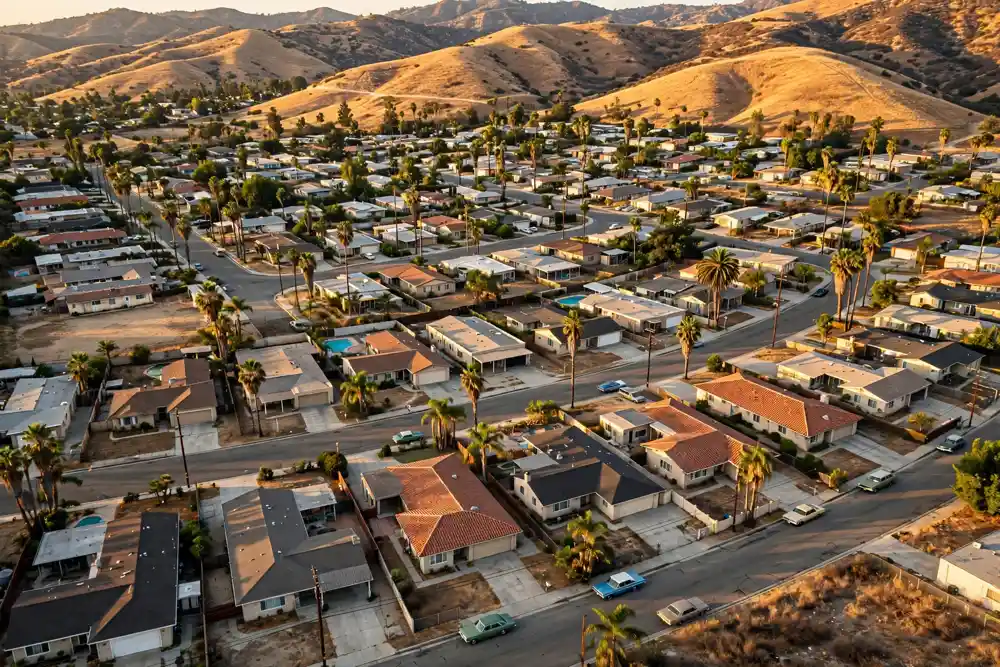
Fallbrook
For customer reviews, see the Generation Roofing profile on Google Maps.
See reviews on Google Maps
Roofing in West Hills, CA starts with an old roof stock and a demanding climate. The neighbourhood's median year built is 1969, so many homes are on a second or third covering, and the western edge meets open hillside country. Generation Roofing, based at 6711 Vicky Ave in West Hills, handles roofing West Hills CA: roof repair, roof replacement, roof leak repair, tile roofing and roof inspection here. Call (747) 335-3331 to talk through your roof and arrange an estimate.
Why we work here
West Hills is a neighbourhood in the City of Los Angeles, not a separate city, and it split from Canoga Park in 1987. Its neighbourhood council boundary is a polyline — north on Nordhoff Street, east along Topanga Canyon Boulevard, Roscoe Boulevard and Shoup Avenue, south on Victory Boulevard, and west along the city limits — so ZIP codes alone do not define it: 91304 is primarily Canoga Park and 91307 also covers Bell Canyon and the unincorporated community spelled Westhills, one word. Permits for City of Los Angeles homes here run through LADBS, and that city-versus-county difference matters street by street at the western edge.
Repairs, replacements and inspections in West Hills
The roofing story here is age plus fire, heat and wind, in that order. The central Platt Ranch tracts grew out of a 1960s build-out on former ranch land, while the Valley Circle corridor marks the change from flat valley-floor tracts to steep, wind-exposed hillside lots at the Simi Hills edge. Around Orcutt Ranch, 1920s estate fabric sits a block from 1960s tracts, and oak and orchard debris loads valleys and gutters. Woodlake and Pinelake Estates, subdivided in the 1960s from the 1939 Peppergate Ranch estate, mix original ranch roofs with later tile conversions near the Chatsworth Reservoir flank. Shadow Ranch brings eucalyptus leaf and branch drop at the roofline, Knapp Ranch Park anchors the split between flat Kittridge tracts and hillside view lots, and the Castle Peak and El Escorpión Park edge holds the highest, most wind-exposed roofs. Monte Vista's late-1990s tile roofs are now at underlayment-replacement age rather than tile-replacement age, Sterling at West Hills adds solar-array penetrations and flashing to the re-roof question, the Sherman Way and Victory Boulevard corridors mix commercial low-slope roofs with tract pitched roofs, and Valley Circle Townhomes, built in 1983, raise an association question — condo roofs are commonly association common elements, so who pays and who approves must be confirmed against the CC&Rs. Hidden Lake, a gated lakeside pocket off Roscoe, is reached through a gate and its association rules were not found publicly, so no HOA claim is made for it here.
Roof work in West Hills covers the full range of steep-slope and low-slope jobs, and the right scope depends on the roof's age, its layers and its exposure. The pages below describe the core work; also see roof replacement, roof repair, roof leak repair, tile roofing and roof inspection. Tile that has outlived its underlayment is a common West Hills case: the tile itself can be sound while the felt beneath it has failed, which is why a lift-and-relay scope is discussed separately from a full tile replacement.
New roof installation in West Hills starts with what is already on the roof: the layers, the decking and the underlayment. A full tear-off is the common scope where several old layers are present, and the written scope names what comes off, what is replaced beneath the surface, and how flashing and ventilation are handled.
Roof replacement in West Hills is scoped by roof size and pitch, by access, and by the layers and decking found beneath the old covering. The written scope names the layers to be removed, the decking and underlayment, the flashing details and the finish material, so the work can be compared like for like.
Roof repair in West Hills most often traces back to flashing, pipe boots, valleys or wind-lifted shingles. A repair scope names the source of the leak or damage, not just the stain or the missing piece, and the written estimate sets out what will be fixed before work starts.
Access shapes the job in West Hills: a 1960s tract build-out, with a neighbourhood median year built of 1969 means staging, material delivery and debris removal cannot be assumed from one street to the next, and hillside or estate lots need a plan before work starts.
Heat, UV and wind do the slow and the sudden damage here: Santa Ana wind on the Valley Circle hillside edge and around Castle Peak, while heat and UV age the covering year by year.
The classic West Hills re-roof case: a 1960s tract home on its second or third covering, where deck condition, layer count and the underlayment beneath tile matter more than the visible surface.
A scope here typically starts with what is under the surface — layers, decking and underlayment — before any finish material is chosen, because those are the items that decide whether a repair holds or a replacement is the honest scope.
Check the written scope for layer removal, decking, underlayment and flashing, and confirm the permit route through LADBS for the address.
Within a street, roof pitch, access and exposure change: flat valley-floor lots give way to steep, wind-exposed upslope lots backing onto open space, where staging and material handling are sharply different.
A scope here has to account for access, ember exposure at the wildland edge and wind-exposed ridges and valleys, and for the fire-zone status of the individual parcel, which is checked by address rather than assumed for the whole neighbourhood.
Check the parcel's fire-zone mapping, the access plan for a steep lot, and how valleys, ridges and penetrations are flashed and sealed.
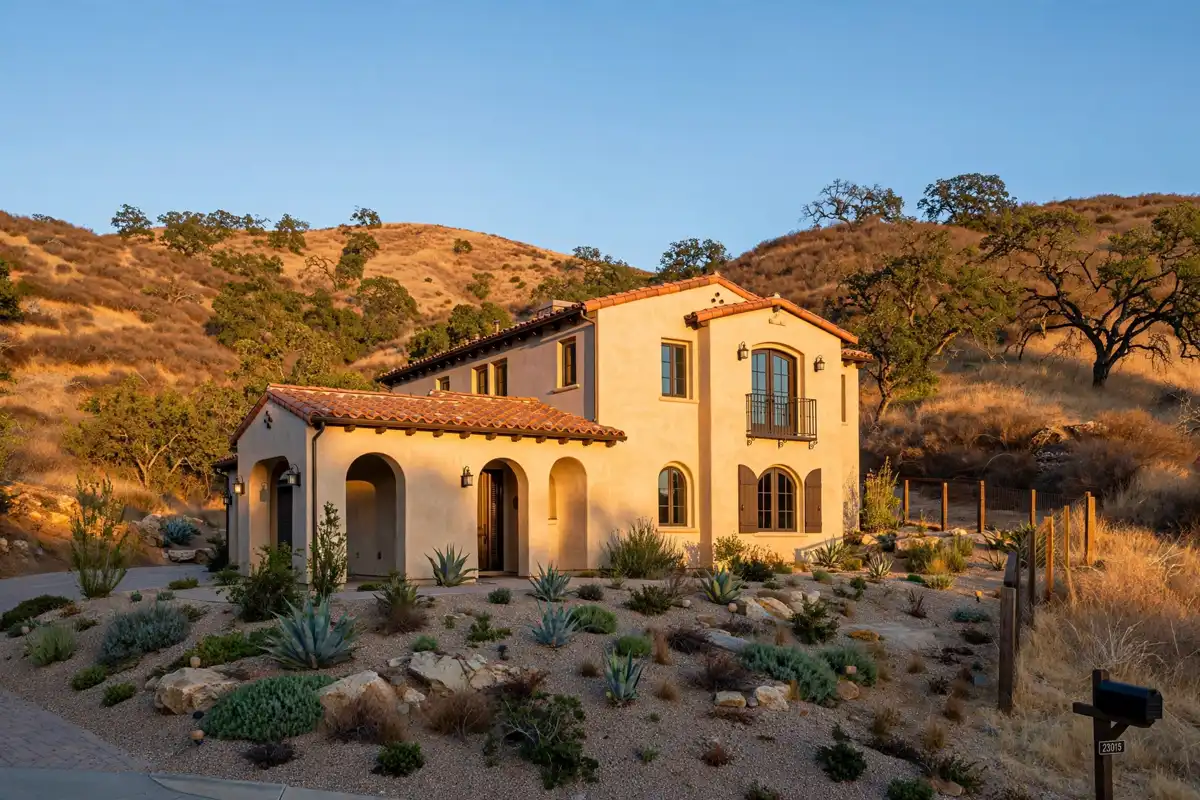
What the housing stock itself tells you is the pattern: a 1960s build-out now on later coverings, tile roofs whose underlayment ages faster than the tile, hillside lots where wind and access shape the job, and valley-floor tracts where heat and UV do the slow damage. The first winter storms after a long dry summer are when small flashing and underlayment weaknesses tend to show up as ceiling stains, and Santa Ana wind events are when already-loose shingles and ridge caps tend to lift.
The written estimate for a West Hills roof is arranged after an on-site look and is set out by scope — repair, partial work or full replacement — with the layers, decking, underlayment, flashing and material named. Call (747) 335-3331 to arrange an estimate.
Ask for a written scope that names the layers to be removed, the decking and underlayment, the flashing details and the material, and ask how the permit route for your address will be handled. A scope that names those items is easier to compare than one that does not, and it is the right basis for comparing one roofer with another.
For homes in the City of Los Angeles portion of West Hills, re-roof permits run through LADBS, and the permit route depends on the scope of the work. Because the trigger for a permit is not stated as a single settled figure in the sources reviewed, confirm the route for your address and scope in writing before work starts, and check the parcel's fire-zone mapping rather than assuming a zone for the neighbourhood.
Generation Roofing is based at 6711 Vicky Ave, West Hills, CA 91307, and contact is by phone only at (747) 335-3331. For City of Los Angeles addresses, the permit route is through LADBS; for the county pocket spelled Westhills, the building department is different, which is why the address matters.
Google Maps
Customer reviews
For customer reviews, see the Generation Roofing profile on Google Maps.
See reviews on Google Maps
West Hills is navigated by its corridors and parks rather than by a single border street, and the names below are the reference points used when describing where a roof sits.
West Hills Hospital
A reference point for describing a roof's location near West Hills Hospital in West Hills.
El Escorpion Park
A reference point for describing a roof's location near El Escorpion Park in West Hills.
West Hills Library
A reference point for describing a roof's location near West Hills Library in West Hills.
Warner Center
A reference point for describing a roof's location near Warner Center in West Hills.
Fallbrook Mall area
A reference point for describing a roof's location near Fallbrook Mall area in West Hills.
Roscoe Boulevard
A reference point for describing a roof's location near Roscoe Boulevard in West Hills.
US-101 via Shoup Avenue
A reference point for describing a roof's location near US-101 via Shoup Avenue in West Hills.
West Hills sits in the middle of a service region that stretches from the hills down into the Valley. We work these neighboring cities regularly, so scheduling a job just outside West Hills does not mean a longer wait or a different crew. Same standards, same materials, same people.
Canoga Park
Directly adjacent to West Hills to the east, sharing ZIP 91304. Many of our West Hills customers originally came from Canoga Park referrals.
Woodland Hills
Just south of West Hills along the 101 corridor. We handle a steady mix of residential repairs and commercial flat roof work here.
Hidden Hills
Borders West Hills to the west. Large equestrian properties with tile and slate roofs that need careful, experienced crews.
Bell Canyon
Gated hillside community on the western edge. Steep access and wind exposure make it similar to the West Hills hillside neighborhoods.
Chatsworth
North of West Hills, sharing the same wind and heat patterns. We do a lot of shingle replacement work in the older tracts here.
Northridge
Northeast of West Hills. Mostly residential roofing with a growing number of tile underlayment replacements on 1970s homes.
If your West Hills roof is showing its age, leaking after rain, or losing shingles in wind, call Generation Roofing at (747) 335-3331. Talk through what you are seeing, and arrange an estimate and a time to look at the roof.
Call (747) 335-3331